House of Sforza
| House of Sforza | |
|---|---|
 | |
| Country | Italy |
| Founded | 1411 |
| Founder | Muzio Attendolo |
| Final ruler | Milan: Francesco II (1535)Pesaro: Galeazzo Sforza (1512) |
| Titles |
|
| Estate(s) | Milan, Pesaro, Gradara |
| Cadet branches | Illegitimate:
|
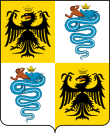
The House of Sforza (pronounced [ˈsfɔrtsa]) was a ruling family of Renaissance Italy, based in Milan. They acquired the Duchy of Milan from the previously-ruling Visconti family in the mid-15th century, and lost it to the Spanish Habsburgs about a century later.
Contents
1 History
2 Sforza rulers of the Duchy of Milan
3 Sforza rulers of Pesaro and Gradara
4 Sforza family tree
5 Notable members
6 In popular culture
7 See also
8 References
History

A miniature of Muzio Attendolo, fifteenth century
Rising from the rural nobility of Lombardy, the Sforza family became condottieri and used this military position to become rulers in Milan. The family governed by force, ruse, and power politics, similar to the Medici in Florence. Under their rule, the city-state flourished and expanded.
Muzio Attendolo (1369–1424), called Sforza (from sforzare, to exert or force), founded the dynasty. A condottiero from Romagna, he served the Angevin kings of Naples and became the most successful dynast of the condottieri.
His son Francesco I Sforza ruled Milan, having acquired the title of Duke of Milan (1450–1466) after marrying in 1441 the natural daughter and only heir of the last Duke of Milan, Filippo Maria Visconti, Bianca Maria (1425–1468), making the Sforzas the heirs of the house of Visconti.
The family also held the seigniory of Pesaro, starting with Muzio Attendolo's second son, Alessandro (1409–1473). The Sforza held Pesaro until 1512, after the death of Costanzo II Sforza.
Muzio's third son, Bosio (1411–1476), founded the branch of Santa Fiora, who held the title of count of Cotignola; the Sforza ruled the small county of Santa Fiora in southern Tuscany until 1624. Members of this family also held important ecclesiastical and political positions in the Papal States, and moved to Rome in 1674, taking the name of Sforza Cesarini.
The Sforza became allied with the Borgia family through the arranged marriage (1493–1497) between Lucrezia Borgia and Giovanni (the illegitimate son of Costanzo I of Pesaro).[1] This alliance failed, as the Borgia family annulled the marriage once the Sforza family were no longer needed.
In 1499, in the course of the Italian Wars, the army of Louis XII of France took Milan from Ludovico Sforza (known as Ludovico il Moro, famous for taking Leonardo da Vinci into his service).
After Imperial German troops drove out the French, Maximilian Sforza, son of Ludovico, became Duke of Milan (1512–1515) until the French returned under Francis I of France and imprisoned him.
Sforza rulers of the Duchy of Milan

Map of Italy in 1494. Insert shows the Duchy of Milan ruled by the Visconti family and inherited by the Sforzas.
Francesco I, 1450–1466
Galeazzo Maria, 1466–1476
Gian Galeazzo, 1476–1494
Ludovico, 1494–1499
Massimiliano, 1513–1515
Francesco II, 1521–1535
Sforza rulers of Pesaro and Gradara
Alessandro, 1445–1473
Costanzo I, 1473–1483
Giovanni, 1483–1500 and 1503–1510
Costanzo II, 1510–1512
Galeazzo, 1512
Sforza family tree

Muzio Sforza with mistress Lucia da Torsano had 7 illegitimate sons- son Gabriele Sforza archbishop of Milan
- son Francesco I Sforza married Bianca Maria Visconti
- son Galeazzo Maria Sforza mistress Lucrezia Landriani
- daughter Bianca Maria (1472–1510), second wife of Holy Roman Emperor Maximilian I
- son Gian Galeazzo(1469–1494), married Isabella of Naples
- son Francesco (II), nominally duke under the regency of Ludovico Maria
- daughter Bona (1494–1557), second wife of King Sigismund I of Poland[2]
- daughter Ippolita Maria Sforza (1493–1501)
- illegitimate daughter Caterina Sforza married Giovanni de' Medici il Popolano
- illegitimate son Ottaviano Maria Sforza bishop of Lodi
- daughter Bianca Maria (1472–1510), second wife of Holy Roman Emperor Maximilian I
- son Ludovico il Moro (the Moor) (1451–1508)
- son Ercole Massimiliano
- son Francesco II (III) Maria
- illegitimate daughter Bianca Sforza 1483–1496 married to Galeazzo Sanseverino
- illegitimate son Giovanni Paolo I (1497–1535), marquess of Caravaggio
- son Ercole Massimiliano
- son Ascanio (1444–1505), Cardinal
- daughter Ippolita Maria (1446–1484), married king of Alfonso II d'Aragon of Naples
- son Galeazzo Maria Sforza mistress Lucrezia Landriani
- son Alessandro, first lord of Pesaro
- son Costanzo I
- son Giovanni (1466–1510), first husband of Lucrezia Borgia
- son Costanzo II (Giovanni Maria) last ruler of Pesaro
- son Giovanni (1466–1510), first husband of Lucrezia Borgia
- son Costanzo I
- Bosio (count of Cotignola, lord of Castell'Arquato)
Notable members
| Name | Portrait | Relationship to the House of Sforza |
|---|---|---|
| Muzio Attendolo |  | Founder of the House of Sforza |
| Francesco Sforza | 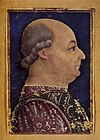 | Son of Muzio Attendolo, first Sforza ruler of Milan |
| Bianca Maria Visconti | 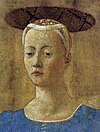 | Wife of Francesco I Sforza |
| Galeazzo Maria Sforza |  | Son of Francesco I Sforza and Bianca Maria Visconti, Duke of Milan |
| Gian Galeazzo Sforza |  | Son of Galeazzo Maria Sforza |
| Bona Sforza |  | Daughter of Gian Galeazzo Sforza and Queen of Kingdom of Poland and Grand Princess of Grand Duchy of Lithuania, as the wife of Sigismund I the Old, King of Kingdom of Poland and Grand Duke of Lithuania |
| Bianca Maria Sforza | 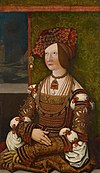 | Daughter of Galeazzo Maria Sforza and Holy Roman Empress, as the wife of Maximilian I, Holy Roman Emperor |
| Anna Sforza |  | Daughter of Galeazzo Maria Sforza and wife of Alfonso I d'Este Her successor would be the infamous Lucrezia Borgia |
| Caterina Sforza | 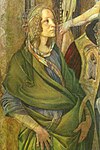 | Illegitimate daughter of Galeazzo Maria Sforza, Duke of Milan |
| Ludovico Sforza | 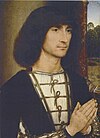 | Son of Francesco I Sforza and Bianca Maria Visconti, Duke of Milan |
| Beatrice d'Este | 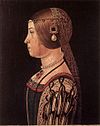 | Wife of Ludovico Sforza |
| Maximilian Sforza |  | Son of Ludovico Sforza, Duke of Milan |
| Francesco II Sforza | 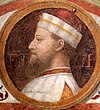 | Son of Ludovico Sforza, Duke of Milan |
| Giovanni Paolo I Sforza |  | Illegitimate son of Ludovico Sforza, first Marquess of Caravaggio |
In popular culture
- One of the cursed artifacts from Friday the 13th: The Series was the "Sforza Glove", attributed to the original family's possession.
Thomas Harris's character Hannibal Lecter is a descendant of the House of Sforza.- In the anime, manga and book series Trinity Blood, one of the Cardinals and Duchess of Milan is named Caterina Sforza.
Caterina Sforza appears as a non-playable character in the video game Assassin's Creed 2 and its sequel, Assassin's Creed: Brotherhood.- The Sforza figure prominently in the Showtime series on the Borgia family.
- The house is mentioned in a song about the Borgia Family in the British edutainment TV show Horrible Histories.
See also
 | Wikimedia Commons has media related to House of Sforza. |
- List of rulers of Milan
- Gradara
- House of Visconti
- Italian Wars
- Pesaro
References
^
"La Signoria degli Sforza". Gradara.com. Retrieved 2013-04-23..mw-parser-output cite.citationfont-style:inherit.mw-parser-output qquotes:"""""""'""'".mw-parser-output code.cs1-codecolor:inherit;background:inherit;border:inherit;padding:inherit.mw-parser-output .cs1-lock-free abackground:url("//upload.wikimedia.org/wikipedia/commons/thumb/6/65/Lock-green.svg/9px-Lock-green.svg.png")no-repeat;background-position:right .1em center.mw-parser-output .cs1-lock-limited a,.mw-parser-output .cs1-lock-registration abackground:url("//upload.wikimedia.org/wikipedia/commons/thumb/d/d6/Lock-gray-alt-2.svg/9px-Lock-gray-alt-2.svg.png")no-repeat;background-position:right .1em center.mw-parser-output .cs1-lock-subscription abackground:url("//upload.wikimedia.org/wikipedia/commons/thumb/a/aa/Lock-red-alt-2.svg/9px-Lock-red-alt-2.svg.png")no-repeat;background-position:right .1em center.mw-parser-output .cs1-subscription,.mw-parser-output .cs1-registrationcolor:#555.mw-parser-output .cs1-subscription span,.mw-parser-output .cs1-registration spanborder-bottom:1px dotted;cursor:help.mw-parser-output .cs1-hidden-errordisplay:none;font-size:100%.mw-parser-output .cs1-visible-errorfont-size:100%.mw-parser-output .cs1-subscription,.mw-parser-output .cs1-registration,.mw-parser-output .cs1-formatfont-size:95%.mw-parser-output .cs1-kern-left,.mw-parser-output .cs1-kern-wl-leftpadding-left:0.2em.mw-parser-output .cs1-kern-right,.mw-parser-output .cs1-kern-wl-rightpadding-right:0.2em
^ http://www.britannica.com/biography/Sigismund-I-king-of-Poland

